Bevco Business Simulation
Bevco Business Simulation is an innovative experiential learning tool that allows student to assess market opportunities, launch new business ventures, and craft and execute business strategy. The simulation facilitates learner-to-learner and learner-to-faculty engagement and is keyed to competency goals for courses in Introduction to Business, Management, Entrepreneurship, Marketing, and Strategic Management.
OVERVIEW
Students participating in Bevco Business Simulation will launch and manage a nutritional beverage company operating in a dynamic, competitive environment. Simulation decisions can be scheduled for up to 12 monthly periods and allow students to provide proof of its business concept and test the effectiveness of their new company’s business model, strategy, and implementation efforts. Instructors may assign the project individually to students or may assign the simulation as a team project. Assignment as a team project enhances student-to-student engagement in the course. Student engagement with faculty through participation in the simulation provides a high impact learning experience through the course.
The student co-founders and managers of the new venture will be responsible for assessing opportunities in the nutritional beverage industry, determining the key elements of the company’s value proposition and how the company will be positioned in the industry, developing a viable profit formula allowing for financial performance meeting investors’ targets, and make decisions relating to:
- Product quality
- Health and wellness properties
- Brand image
- Sustainability rating
- Wholesale price charged to convenience stores and supermarkets
- Retail price charged to online consumers.
VALUE DRIVERS
In developing a customer value proposition and a competitive strategy, students are able to select a variety of decision option affecting key competitive variables as described below:
-
Product Quality
Impacted by decisions the reputation of the company's suppliers, number of beverage varieties and flavors, and quality control budget relative to the volume of production orders.
-
Health and Wellness
Determined by the use of standard or organic ingredients, optional ingredients offering specific health and wellness properties, and the reputation of the company's suppliers.
-
Brand Image
Affected by supplier reputation, ingredient quality, grade of beverage packaging selected, the use of sustainable farming partners, the number of beverage varieties and flavors, price, advertising budget, website development budget, size of a company's retail network, and customer service.
-
Sustainability Rating
Impacted by the quality of ingredients, inclusion of optional ingredients offering specific health and wellness properties, environmentally sustainable packaging materials, supplier reputation, and the use of sustainable farming partners.
-
Pricing
Students are able to set pricing in both brick-and-mortar locations and the company's online retailing site.
Decision entries required in each competitive round include choices concerning:
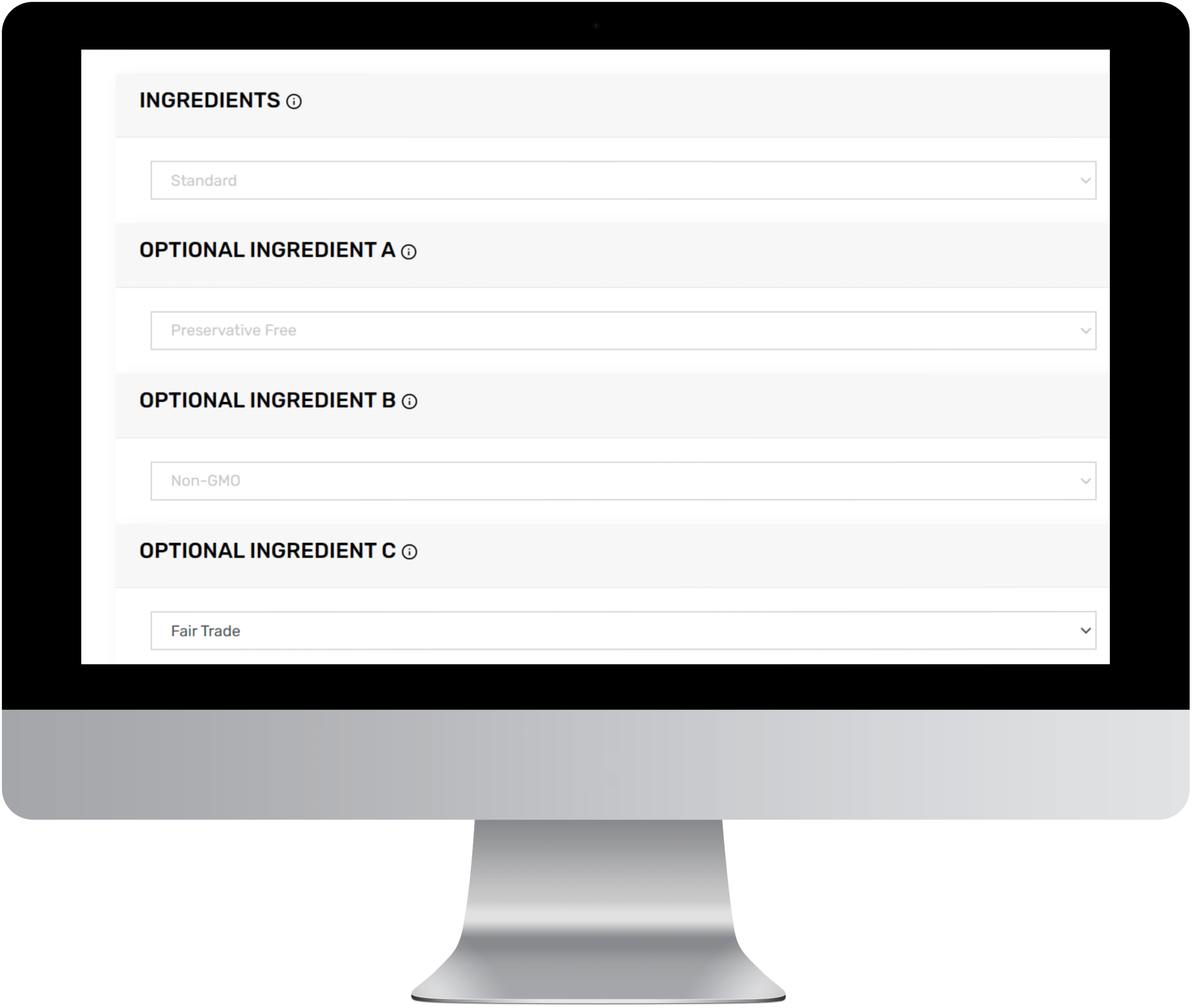
Purchasing- Standard or organic ingredients
- Various optional ingredients such as preservative-free, non-GMO, and nutraceutical ingredients
- Selection of suppliers based upon reputation
- Grade of packaging materials
- Optional packaging materials such as plant-based bioplastics, recycled materials, or glass
- Optional use of sustainable farming partners
Production
- Number of cases of beverages ordered from contract manufacturers
- Number of flavors and varieties
- Quality control budget to supervise the bottling process
Marketing
- Wholesale price per case charged to retailers
- Size of retail network
- Level of customer service provided to retailer accounts
- Size of the advertising budget
- Online retail price per case charged to consumers
- Level of customer service provided to online consumers
- Optional free delivery to online consumers
Informational popups are provided for all student dashboard navigation bar items and decision entries. The Purchasing, Production and Marketing informational popups discuss how the particular decision choice affects the company’s value proposition and competitiveness and how the company’s unit costs are impacted by various decision entry choices.
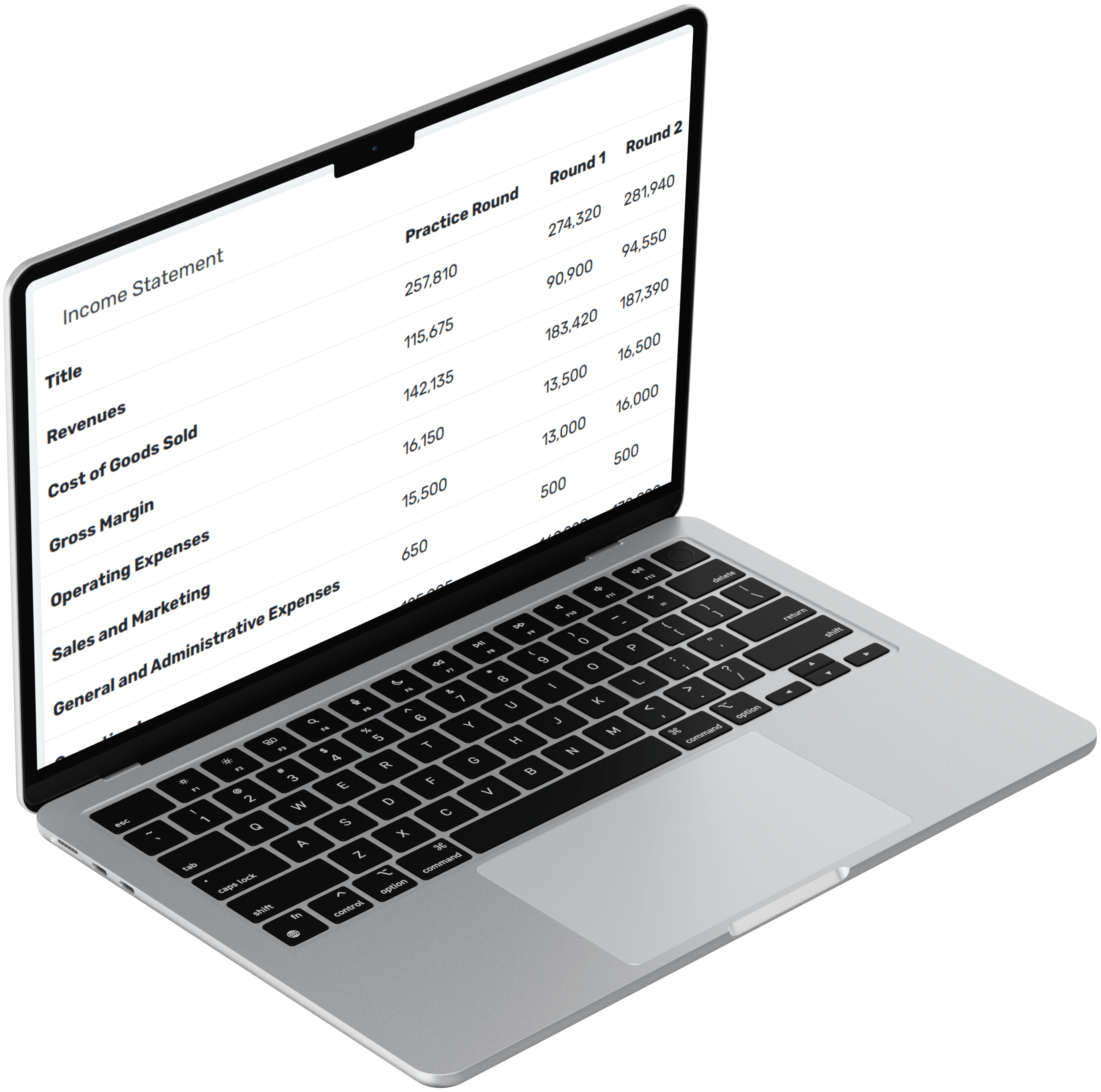
The student dashboard navigation bar also provides projected and actual income statements and cost reports allowing students to assess the effectiveness of its business model and profit formula. The iterative decision-making process and availability of results provide a Proof of Concept allowing the co-founders/managers of each company to validate their business model and competitive approach.
Decision Scheduling and Competitive Outcomes
Up to 12 decision rounds may be scheduled by the instructor depending on course objectives. Instructors establish a deadline for company co-managers to complete entries for each decision round. Deadlines may be set as often as every day or scheduled less frequently to match the term for the course. Month-based decision rounds are processed at the deadline without any additional action by the instructor.
When the instructor-specified deadline for a decision round arrives, the decision entries of rival companies are automatically processed. Bevco Business SimulationTM algorithms allocate unit sales in the wholesale and online markets for nutritional beverages based upon the relative strength of the company’s value proposition and competitive strategy. The factors determining sales volume include Wholesale and Online Pricing, Quality Rating, Health & Wellness rating, Brand Image and Sustainability Rating.
The greater the differences in the overall competitiveness of the product offerings of rival companies, the bigger the differences in their resulting sales volumes and market shares. Conversely, the smaller the overall competitive differences in the product offerings of rival companies, the smaller the differences in sales volumes and market shares. This algorithmic approach is what makes Bevco Business SimulationTM a "competition-based" entrepreneurship and strategy simulation and accounts for why the sales and market share outcomes for each decision round are always unique to the particular strategies and decision combinations employed by the competing companies. There's no built-in bias favoring any one business model or strategic approach and no "secret set of competitive moves" that are sure to result in a company becoming the industry leader. Which strategies end up delivering the best performance in any given group of companies that are competing head-to-head always depends on the competitive interplay among the specific decisions and strategies of rival companies.
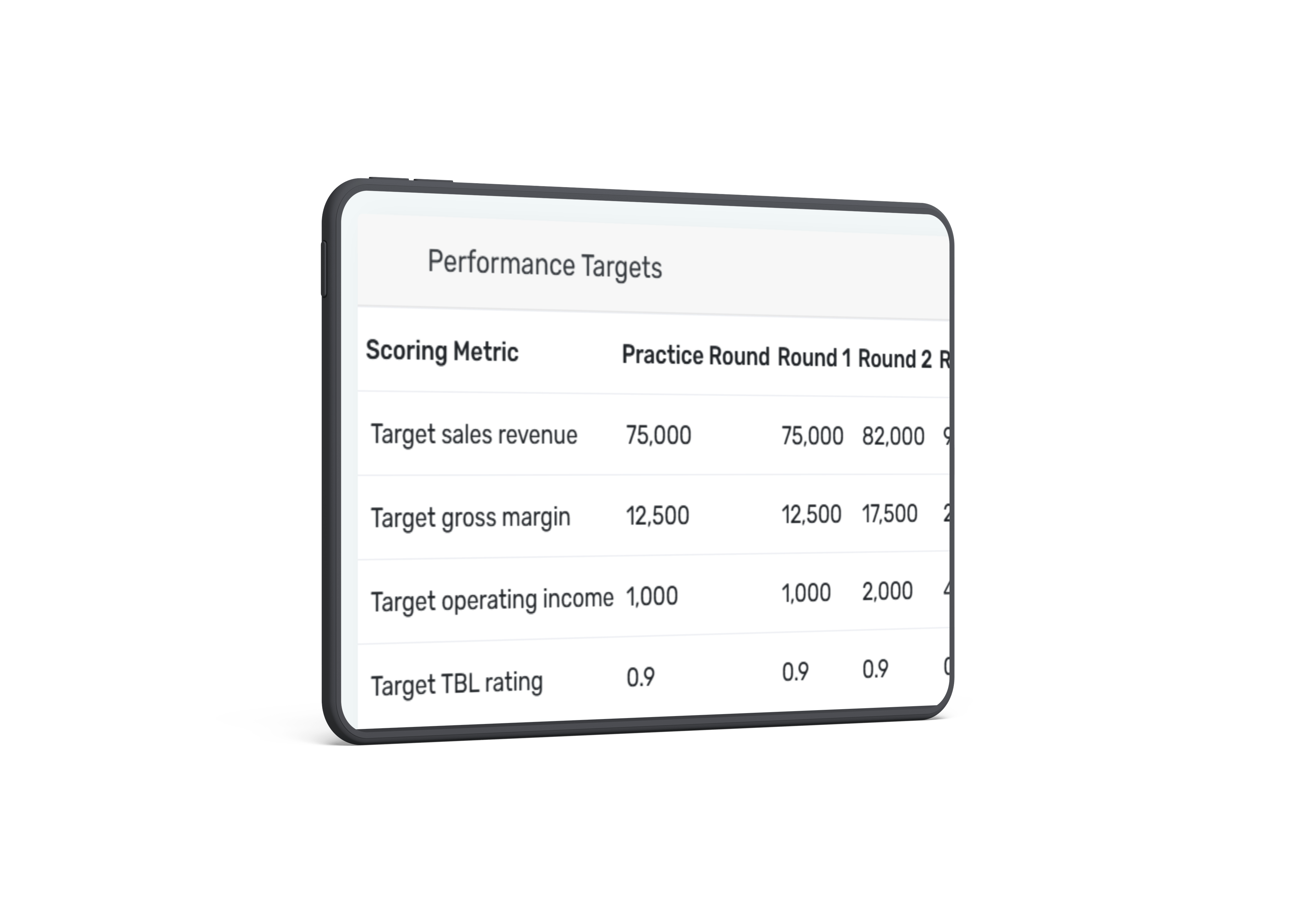
Once unit sales and market shares are awarded, the company and industry reports are then generated and become available to students by accessing their company Dashboard. The Dashboard provides the Current Month Score and the Game-to-Date score along with key financial metrics and competitive KPI data for the company. Students can assess the strength of their business model and strategy by comparing the company’s results to the high, low, and average data for the entire industry. The Current Month Score is determined by how actual results compare to performance targets for four criteria: Sales Revenue, Gross Margin, Operating Margin, and a Triple Bottom Line rating. A triple bottom line rating is a composite rating reflecting your performance on health and wellness, environmental sustainability and financial metrics. Performance targets for the four performance criteria are provided for each decision round in the Performance Targets report.
Company performance may also be assessed by reviewing projected, current and historical Income Statement data. Students should compare the company’s projected performance relative to current month targets prior to finalizing their decision entries. Projected unit sales and revenue is calculated based upon the number of cases ordered from contract manufacturers. Actual sales volume and revenue may vary from projected if sales volume is lower than the number of cases ordered. Any ending inventory is automatically liquidated at direct cost, eliminating any positive or negative impact of an inaccurate sales forecast.
Projected performance will differ from actual performance if students’ assumptions about the strength of competitive rivalry are inaccurate. Projected, current, and historical cost report data showing all costs on a per case basis is also available. Students also have a record of decision entries in projected and prior years by accessing the Decision Entry History report. The industry and company statistics are available to company co-managers after each decision round to use in making strategy adjustments and decisions for the next competitive round.
All cause-effect relationships and underlying algorithms in Bevco Business SimulationTM are based on sound business and economic principles and connect tightly to the real-world workings of the nutritional beverage market. The "real-world" character that has been carefully and systematically designed into Bevco Business SimulationTM allows company co-managers to think rationally and logically as they test the viability of their business model and competitive strategy during the Proof of Concept period of up to 12 decision rounds. The thesis is that the more Bevco Business SimulationTM mirrors real-world market conditions and real-world managerial decision-making, the more pedagogical value it has. Why? Because tight linkages between the functioning of Bevco Business SimulationTM and "the real world" provide class members with a robust experiential learning opportunity and enhance competency goal attainment and learner success.
EXPERIENTIAL LEARNING
Students participating in Bevco will gain hands-on experience in assessing market opportunities, launching a startup venture, crafting and executing strategy, and analyzing financial metrics and results of operations. The iterative decision-making process allows students to gain experience in sustaining company performance and better understand the dynamic nature of competitive rivalry. In addition, Bevco allows students to make decisions individually or in teams of up to four members. Participating in the simulation emphasizes accountability in decision-making, while participating in a group prepares students for workplace environments emphasizing teamwork and collaborative decision-making.
STUDENT ENGAGEMENT
Bevco facilitates student-to-faculty and student-to-student engagement during participation in the simulation. Students engage with faculty when required to make presentations on recent performance or during consultations arranged by the student. Engagement with faculty creates a high impact learning experience as the student must demonstrate learning through action following each interaction with the instructor. Student-to-student engagement occurs through team assignments that also serve as high impact learning experiences where students must debate their assessments of market opportunities, the internal situation, and paths to improve the company’s competitive standing and financial performance.
COMPETENCY GOALS AND LEARNER SUCCESS
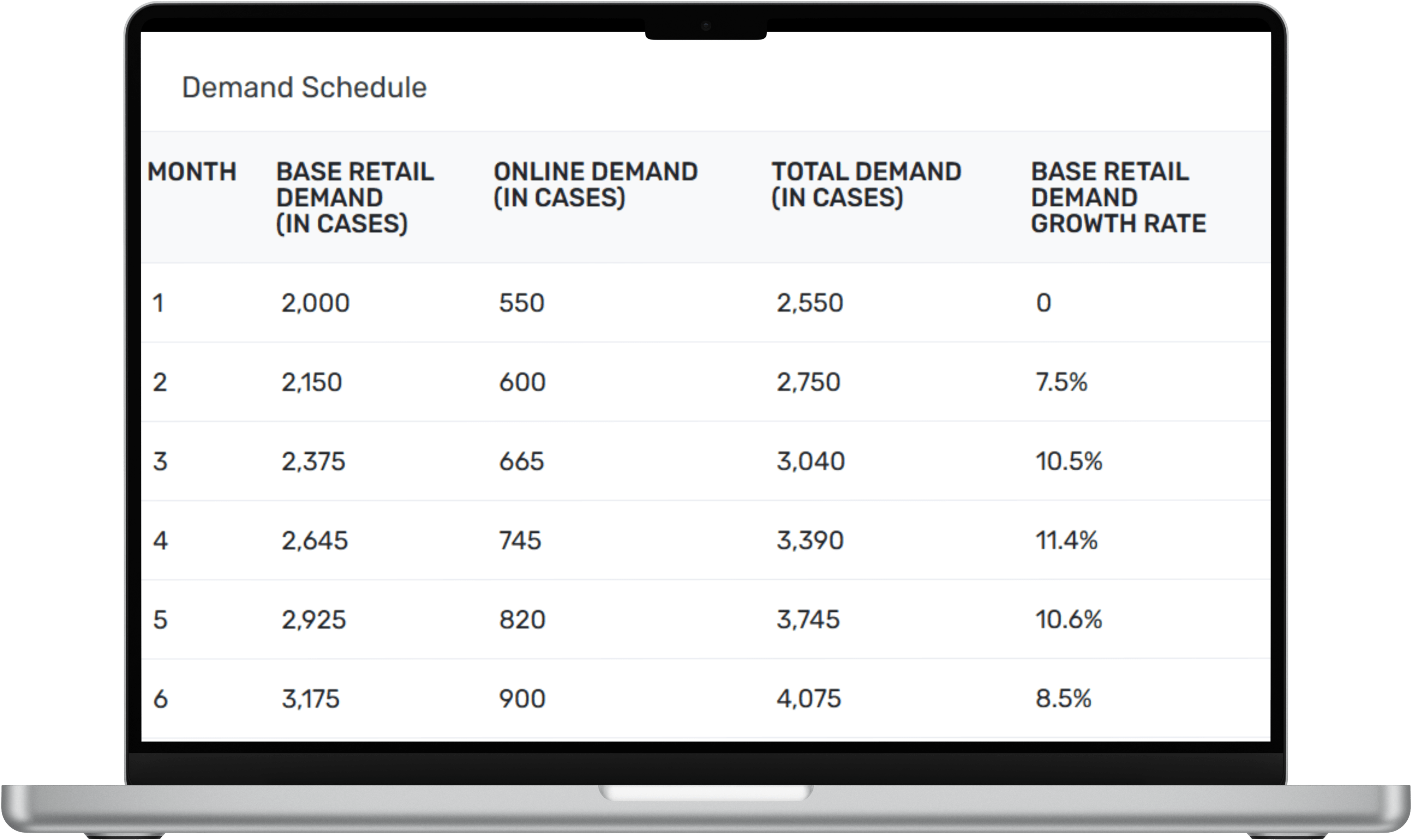
DATA ANALYSIS Students are able to assess market demand, competitive data, trend data, and financial performance.
BUSINESS MODEL DEVELOPMENT AND COMPETITIVE STRATEGY Students develop a customer value proposition, profit formula and competitive strategy based upon such factors as price, quality, brand image, health & wellness rating, and sustainability practices.
OPERATIONS MANAGEMENT Students must forecast demand, purchase ingredients and packaging materials, and schedule production with contract manufacturers.
MARKETING Students compete in retail markets through established brick-and-mortar grocers and convenience stores and sell beverage products direct-to-consumer via an online marketing strategy.
FINANCIAL ANALYSIS Students are able to review financial trends and the overall success of its business model and strategy with monthly income statements.
SCORING VARIABLES Current month and game-to-date company scores and rankings are based upon the following equally rated metrics:
- Revenues
- Gross margin
- Operating income
- Triple bottom line rating
TECHNICAL REQUIREMENTS
-
No Installation
A web-based app requiring no installation
-
-
Device Compatibility
PCs, Mac, and tablet compatibility
-
-
Browsers Supported
Chrome, Edge, Firefox, DuckDuckGo, and most other browsers
REQUEST INFORMATION
Email Address
Complete the form below to learn more about Bevco Business Simulation as an experiential learning tool or request user support.